

Epithalon 10MG
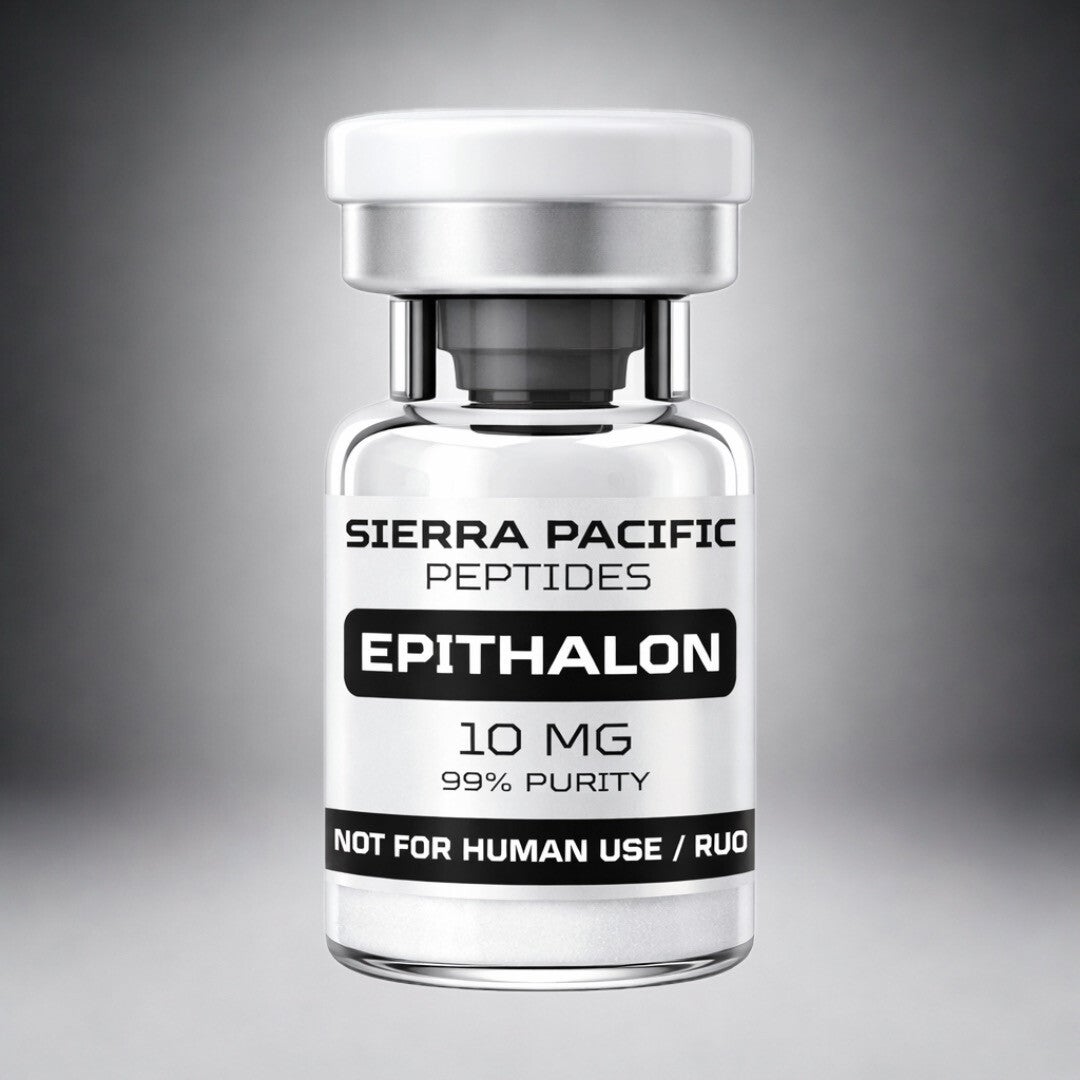

Epithalon 10MG
Telomerase-Activating Peptide
Category: Longevity & Cellular Aging Peptides
EPITHALON-10MG | Form: Lyophilized Powder | Purity: ≥ 99% (HPLC Tested)
Product Overview
Epithalon (also known as Epitalon or Epithalamin) is a synthetic tetrapeptide derived from the natural pineal peptide Epithalamin, which was originally isolated from the bovine pineal gland. It has been extensively studied in the field of biogerontology for its role in activating telomerase, extending telomere length, and promoting genomic stability. Research indicates that Epithalon supports circadian rhythm regulation, antioxidant defense, and cellular regeneration, making it a key peptide in longevity and anti-aging studies.
Epithalon Research Summary
Epithalon has been investigated for its potential to delay cellular aging through the activation of telomerase, an enzyme that restores telomere length and promotes DNA stability. It also influences the expression of genes involved in circadian rhythm and oxidative stress control. Studies from the St. Petersburg Institute of Bioregulation and Gerontology and other research centers have demonstrated its broad effects on longevity, neuroprotection, and endocrine regulation.
Key research findings include:
- Induces telomerase activity and elongates telomeres in somatic cells (Biochemistry Moscow, 2003).
- Increases lifespan and reduces tumor incidence in animal models (Bull Exp Biol Med, 2001).
- Normalizes melatonin secretion and supports circadian rhythm regulation (Neuroendocrinol Lett, 2004).
- Enhances antioxidant enzyme activity and reduces lipid peroxidation (Adv Gerontol, 2005).
- Protects neurons and supports DNA repair in aging cell models (Front Aging Neurosci, 2020).
Epithalon’s multi-faceted activity makes it a foundational compound for research on aging, telomere biology, and regenerative endocrinology.
Applications in Research
- Telomerase activation and telomere-length regulation studies
- Longevity and cellular aging investigations
- Neuroendocrine and pineal peptide research
- Oxidative stress and mitochondrial protection models
- Circadian rhythm and melatonin secretion studies
For Research Use Only
This peptide is intended exclusively for laboratory and preclinical research applications. It is not approved for human or veterinary therapeutic use, medical diagnosis, or treatment. Researchers must adhere to institutional and regulatory biosafety guidelines when handling this compound.
References
- Khavinson V. et al. 'Peptide Regulation of Telomerase Activity in Human Cells.' Biochemistry (Moscow), 2003.
- Anisimov V. et al. 'Effects of Epithalon on Lifespan and Tumor Incidence in Mice.' Bulletin of Experimental Biology and Medicine, 2001.
- Khavinson V., Lin'kova N. 'Epithalon and Pineal Peptides in Aging and Melatonin Regulation.' Neuroendocrinology Letters, 2004.
- Khavinson V., Malinin V. 'Peptide Bioregulators in Gerontology.' Advances in Gerontology, 2005.
- Zhang X. et al. 'Epithalon-Induced Neuroprotection and DNA Repair Pathways in Aging Models.' Frontiers in Aging Neuroscience, 2020.