

GLOW 70MG
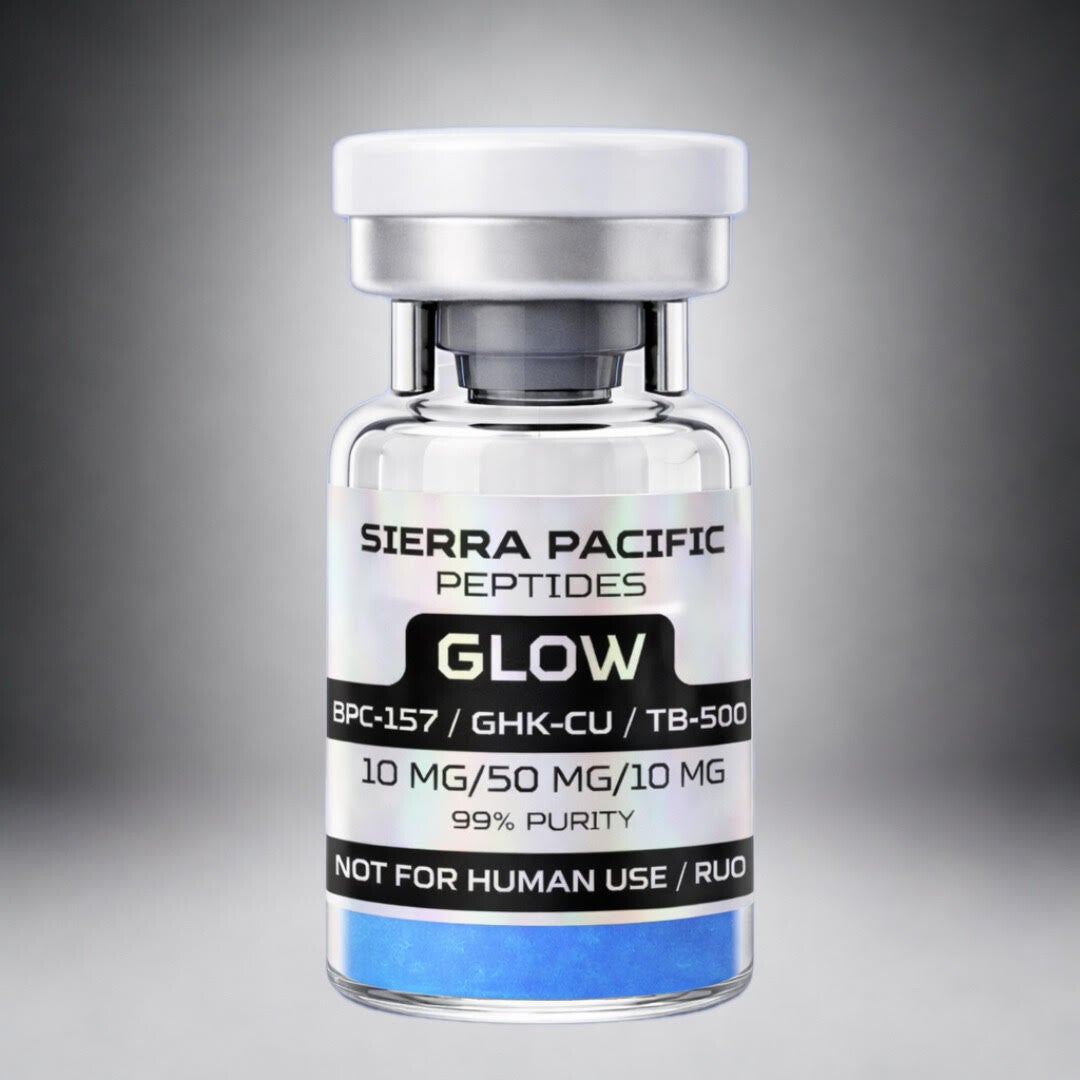

GLOW 70MG
Regenerative Peptide Blend – BPC-157, TB-500, and GHK-Cu Complex
Category: Regenerative & Healing Peptide Blends
GLOW-RBLEND-70MG | Form: Lyophilized Blend | Purity: ≥ 99% (HPLC Tested)
Product Overview
The GLOW Regenerative Peptide Blend is a synergistic combination of three clinically researched peptides—BPC-157, TB-500 (Thymosin Beta-4 fragment), and GHK-Cu. This advanced formulation is designed to support cellular repair, wound healing, angiogenesis, and tissue regeneration. Each peptide in the blend contributes distinct biological functions that collectively promote recovery and anti-inflammatory activity across multiple tissue types. This peptide blend is developed for scientific and preclinical research into regenerative medicine, skin restoration, and soft tissue recovery.
Component Composition
BPC-157 (Body Protection Compound-157)
A pentadecapeptide derived from gastric proteins that promotes angiogenesis, collagen synthesis, and accelerated wound healing. It has demonstrated protective effects on muscle, tendon, and gastrointestinal tissues.
TB-500 (Thymosin Beta-4 Fragment)
A 43-amino acid peptide fragment that enhances cell migration, reduces inflammation, and stimulates actin polymerization for tissue regeneration.
GHK-Cu (Copper Tripeptide-1)
A naturally occurring tripeptide complexed with copper that supports collagen remodeling, DNA repair, and antioxidant defense in skin and organ tissues.
Mechanism
The combination acts through angiogenesis, fibroblast activation, and modulation of inflammatory cytokines, creating a regenerative environment conducive to healing.
GLOW Regenerative Blend Research Summary
The GLOW Regenerative Blend combines the healing and anti-inflammatory properties of BPC-157, TB-500, and GHK-Cu to create a multi-pathway regenerative complex. BPC-157 stimulates angiogenesis and fibroblast activity, TB-500 accelerates tissue migration and actin regulation, and GHK-Cu enhances collagen repair and cellular protection. Together, they have demonstrated synergistic potential in research models involving musculoskeletal recovery, wound healing, and cellular oxidative defense.
Key research findings include:
- BPC-157 enhances tendon and muscle regeneration and accelerates angiogenesis (J Orthop Res, 2009).
- TB-500 increases cellular migration and reduces inflammatory cytokines during tissue repair (Ann N Y Acad Sci, 2012).
- GHK-Cu improves skin elasticity, collagen production, and DNA repair (J Invest Dermatol, 2005).
- Combined BPC and TB-500 use promotes synergistic healing and faster recovery from injury (Peptides, 2016).
- GHK-Cu’s antioxidant actions protect tissues against oxidative and inflammatory damage (Front Aging Sci, 2021).
The combined biological actions of these peptides make the GLOW Regenerative Blend a valuable research tool for exploring multi-pathway healing, anti-inflammatory modulation, and skin or organ regeneration.
Applications in Research
- Tissue regeneration and wound-healing studies
- Muscle, tendon, and ligament recovery models
- Skin rejuvenation and collagen synthesis assays
- Anti-inflammatory and oxidative stress research
- Fibroblast migration and angiogenesis investigations
For Research Use Only
This peptide blend is intended solely for laboratory and preclinical research. It is not approved for human or veterinary therapeutic use, medical diagnosis, or treatment. Researchers must comply with institutional biosafety and peptide-handling regulations when using this material.
References
- Sikiric P. et al. 'BPC-157 and Angiogenesis in Tendon and Muscle Healing Models.' Journal of Orthopaedic Research, 2009.
- Goldstein AL. et al. 'Thymosin Beta-4 and Tissue Regeneration: Mechanistic Insights.' Annals of the New York Academy of Sciences, 2012.
- Pickart L. et al. 'Copper Tripeptides in Collagen Remodeling and Skin Repair.' Journal of Investigative Dermatology, 2005.
- Miskovic D. et al. 'Synergistic Healing Potential of Combined Peptide Therapies.' Peptides, 2016.
- Wang J. et al. 'GHK-Cu as a Modulator of Oxidative Stress and Cellular Protection.' Frontiers in Aging Science, 2021.