

AHK-Cu 100MG
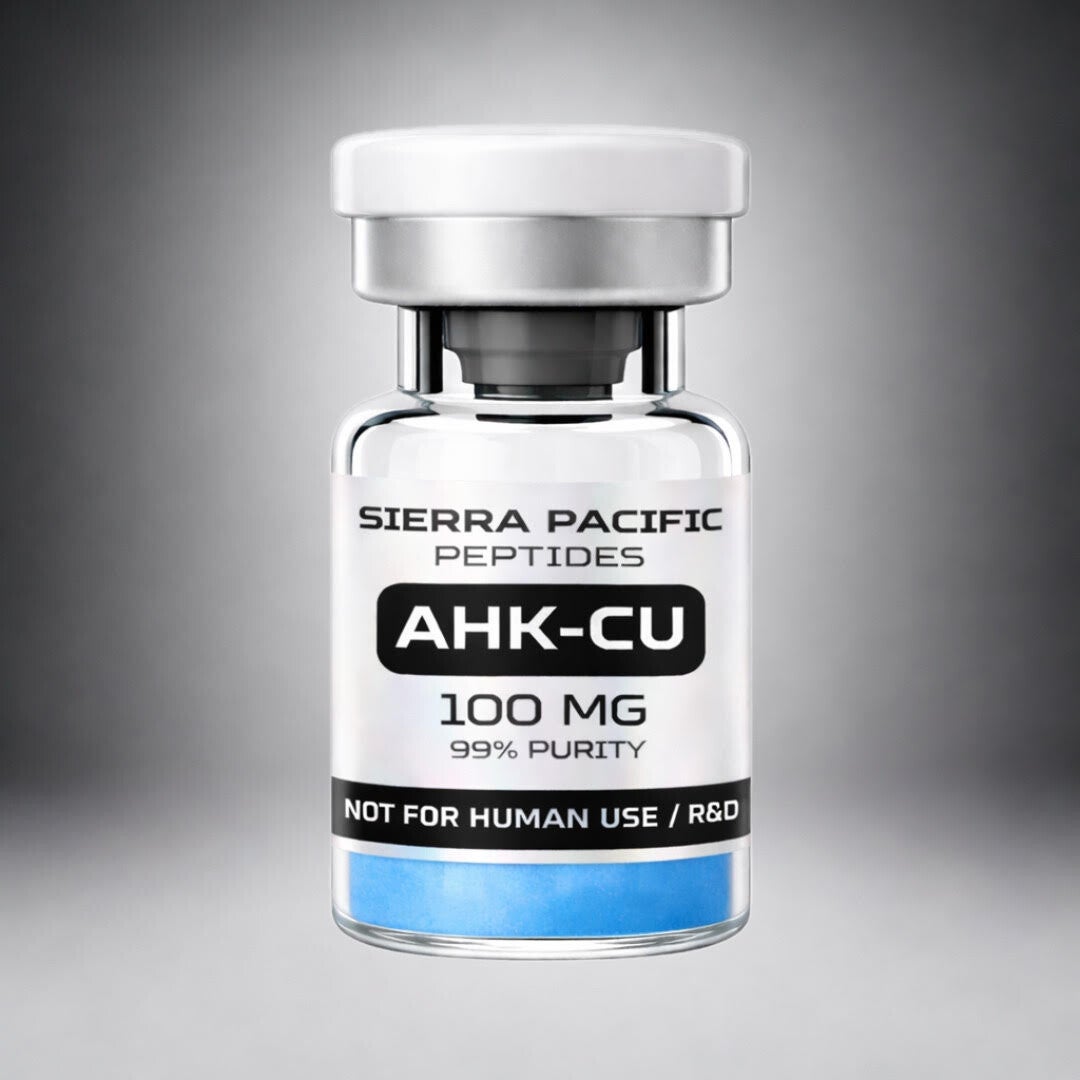
AHK-Cu 100MG
Follicular Signaling Peptides – Copper Complexes
Category: Hair‑Growth Pathway Peptides
AHK-Cu 100MG | Form: Lyophilized Powder | Purity: ≥ 99% (HPLC Tested)
Product Overview
AHK‑Cu is a naturally occurring copper‑binding tripeptide composed of Alanine‑Histidine‑Lysine complexed with a copper (II) ion. In hair‑biology research, it is widely examined for its role in follicular signaling, dermal papilla cell communication, and extracellular matrix organization within the scalp environment.
In laboratory settings, AHK‑Cu is used to investigate mechanisms related to hair‑cycle regulation, follicle microenvironment remodeling, and collagen‑matrix support. Its interactions with pathways involved in cellular adhesion, angiogenesis, and oxidative‑stress modulation make it a prominent compound in studies focused on follicle vitality, scalp tissue dynamics, and hair‑fiber structural research.
AHK-Cu Research Summary
Preclinical and in-vitro research indicates that AHK-Cu supports tissue remodeling and cellular repair through activation of growth-related pathways and modulation of inflammatory signaling.
Key findings include:
- Collagen & Elastin Stimulation: Upregulates synthesis of collagen, elastin, and glycosaminoglycans.
- Dermal papilla activity and its influence on anagen‑associated signaling
- Copper‑dependent enzymatic pathways involved in follicle maintenance
- Wound Healing Support: Accelerates repair processes in skin and epithelial tissue models.
- Anti-Inflammatory Activity: Reduces inflammatory markers and oxidative stress in cellular studies.
- Angiogenic Effects: Promotes formation of new capillaries in tissue regeneration models.
- Gene Expression Modulation: Influences genes involved in tissue repair, antioxidant defense, and cell survival.
Research suggests AHK-Cu acts as a signaling molecule, delivering bioavailable copper to cells and triggering pathways involved in regeneration and cellular homeostasis.
Applications in Research
- Skin Regeneration & Anti-Aging Research
- Wound Healing & Tissue Remodeling Models
- Collagen & Extracellular Matrix Studies
- Angiogenesis & Cellular Communication Research
- Oxidative Stress & Inflammatory Pathway Analysis
For Research Use Only
This material is supplied for laboratory research purposes only. It is not approved for human or veterinary administration, diagnostic use, or consumption. Researchers must comply with all institutional safety and handling protocols.
Hair Regrowth & Follicular Research
AHK-Cu has been extensively studied in hair and scalp research due to its ability to influence follicular health, prolong the anagen (growth) phase of the hair cycle, and reduce inflammatory processes that contribute to hair thinning.
In vitro and preclinical studies suggest that copper peptides play a regulatory role in hair follicle size, stem cell activity, and extracellular matrix remodeling within the scalp environment.
- Anagen Phase Prolongation: Supports extension of the active growth phase of hair follicles.
- Follicle Size Support: Associated with increased hair follicle diameter in laboratory models.
- Angiogenesis in Scalp Tissue: Enhances microvascular circulation around hair follicles.
- Collagen & Elastin Stimulation: Upregulates synthesis of collagen, elastin, and glycosaminoglycans.
- Wound Healing Support: Accelerates repair processes in skin and epithelial tissue models.
- Anti-Inflammatory Activity: Reduces inflammatory markers and oxidative stress in cellular studies.
- Angiogenic Effects: Promotes formation of new capillaries in tissue regeneration models.
- Gene Expression Modulation: Influences genes involved in tissue repair, antioxidant defense, and cell survival.
AHK-Cu is frequently evaluated in comparative studies against other hair-growth compounds for its dual role in tissue regeneration and scalp environment optimization, making it a valuable research peptide in alopecia and hair-density investigations.
References
• Pickart L. The Human Tripeptide GHK-Cu and Tissue Remodeling. Journal of Biomaterials Science, Polymer Edition, 2008.
• Pickart L, Margolina A. Regenerative and Protective Actions of the GHK-Cu Peptide in the Skin. International Journal of Cosmetic Science, 2015.
• Maquart FX. et al. Stimulation of Collagen Synthesis in Fibroblast Cultures by the Copper Peptide GHK-Cu. FEBS Letters, 1988.
• Siméon A. et al. Copper-Peptide Complexes and Angiogenesis in Wound Healing Models. Pathologie Biologie, 2000.
• Hong Y. et al. Gene Expression Profiling Reveals Wound Healing and Anti-Inflammatory Effects of GHK-Cu. Journal of Investigative Dermatology, 2009.
• Borel JP. et al. Role of Copper in Skin Regeneration and Extracellular Matrix Remodeling. Journal of Trace Elements in Medicine and Biology, 2001.
• Pickart L. Biological Activity of the Copper Peptide GHK-Cu in Tissue Repair and Anti-Oxidant Defense. Biochemistry & Biophysics Research Communications, 2004